
AI Agent for Ecommerce: Boost Sales & Cut Support Costs in 2026
Introduction
"The best way to predict the future is to create it." — Peter Drucker. Peter Drucker's timeless insight resonates powerfully in modern e-commerce. We're not just witnessing digital transformation—we're actively shaping it. Forward-thinking businesses are creating their competitive future by adopting AI Agent for Ecommerce that fundamentally change how they engage customers, process inquiries, and drive revenue.
This isn't about following trends; it's about proactively building systems that scale effortlessly while maintaining the personalized touch customers demand.
The current state of e-commerce presents a paradox. On one hand, we're experiencing explosive growth—online retail continues to expand at double-digit rates annually. On the other, customer expectations have reached unprecedented heights. Shoppers expect instant responses at 3 AM, personalized product recommendations that feel intuitive rather than intrusive, and seamless resolution of issues without repeating their story multiple times. The traditional approach of scaling customer service by simply hiring more agents has become financially unsustainable. Labor costs rise linearly with volume, training cycles stretch for weeks, and maintaining consistent quality across shifts and time zones remains an ongoing challenge.
This is where AI agents for e-commerce enter the picture—and they're fundamentally different from the chatbots you might have encountered five years ago. We're talking about autonomous entities powered by Large Language Models that can reason through complex scenarios, access multiple systems simultaneously, and execute actions that previously required human intervention. These agents don't just answer questions; they solve problems, recommend products, process returns, and even negotiate in real-time.
Throughout this article, we'll explore concrete strategies for implementing AI agents that boost sales through conversational commerce, dramatically reduce operational costs by automating routine inquiries, and accelerate growth by enabling your team to focus on high-value customer relationships. You'll discover the technical architecture that makes these systems work, the measurable KPIs that prove ROI, and the human-in-the-loop model that preserves empathy while maximizing efficiency. Whether you're a Customer Service Director managing ticket volume, a CTO evaluating digital transformation initiatives, or a Business Owner seeking competitive advantages, you'll find actionable insights that apply directly to your challenges.
Key Takeaways
- AI agents autonomously resolve 70-80% of routine customer inquiries, dramatically reducing support costs while maintaining high satisfaction scores
- 24/7 multilingual support enables global expansion without proportional increases in headcount, with real-time translation for Hindi, Hinglish, Tamil, and other regional languages
- Conversational commerce and personalized product recommendations directly increase conversion rates by 10-20% and boost average order value through intelligent cross-selling
- Seamless integration with existing e-commerce platforms (Shopify, WooCommerce, Magento) and CRM systems ensures rapid deployment within 2-6 weeks
- Human-in-the-loop models preserve the human touch for complex issues while maximizing automation efficiency, with sentiment analysis triggering escalations when needed
- Measurable ROI through concrete KPIs including deflection rate, cost per conversation (70-90% reduction), CSAT scores, and revenue directly attributed to chat interactions
What Is an AI Agent for E-commerce and How Does It Differ from Traditional Chatbots?
 Let's cut through the confusion. When most people hear "chatbot," they picture those frustrating automated systems that force you through rigid menus, repeatedly failing to understand what you actually need. An AI agent for e-commerce operates on an entirely different level.
Traditional chatbots follow decision trees—if a customer types "order status," the bot follows a predetermined path to provide a tracking link. It's essentially an interactive FAQ system with limited flexibility. The moment a customer's question falls outside the scripted scenarios, the bot fails spectacularly, often responding with the digital equivalent of a blank stare: "I didn't understand that. Please rephrase your question."
AI agents, by contrast, are autonomous software entities powered by Large Language Models (LLMs), Natural Language Processing (NLP), and machine learning. They don't follow scripts; they reason. When a customer asks, "My package was supposed to arrive yesterday for my daughter's birthday, and now the tracking shows it's stuck in Mumbai—can you help?" an AI agent understands the emotional context (time-sensitive, important occasion), queries the shipping provider's API in real-time, retrieves the specific package location, identifies the delay cause, and proactively offers alternatives—perhaps expedited shipping to a nearby pickup location or a discount on the next order as an apology.
The architecture that enables this capability consists of three integrated layers:
- Intelligence Layer serves as the brain, powered by models like GPT-4o or Claude 3.5, handling intent recognition, sentiment analysis, and multi-turn reasoning
- Memory Layer maintains both short-term context (the current conversation flow) and long-term memory (past purchase history, preferences, previous complaints), providing continuity across interactions
- Integration Layer connects the agent to your entire e-commerce tech stack through APIs—your order management system, CRM, inventory database, payment gateway, and shipping providers
This architectural sophistication translates to genuine "agency"—the ability to take autonomous actions. While a chatbot might tell you where to find your return policy, an AI agent can initiate the return process, generate a QR code for courier pickup, calculate your refund amount including shipping credits, update your CRM record, and schedule a follow-up check-in—all within a single conversation. It's the difference between a directory sign and a personal concierge who actually escorts you to your destination and confirms you arrive successfully.
For Customer Service Directors and CTOs, this distinction matters enormously. We're not talking about deflecting tickets to FAQs; we're discussing virtual employees capable of performing complex, multi-step tasks across the entire customer experience. The business value lies in this autonomy—each interaction the AI agent completes independently represents a support ticket your human team never has to touch, freeing them to focus on the complex, high-value scenarios where human judgment and empathy truly make a difference.
How AI Agents Transform Customer Support Operations and Reduce Costs
 The economics of traditional customer support create an impossible dilemma. As your e-commerce business grows, ticket volume increases proportionally—or worse, exponentially during peak seasons. The conventional approach involves hiring more agents, which means linear cost increases: double the volume, double the headcount, double the payroll. Add in training costs, employee turnover, benefits, and infrastructure, and you're looking at a support operation that consumes an ever-growing percentage of revenue.
AI agents break this unsustainable model. They provide 24/7/365 availability without night shift premiums, weekend surcharges, or holiday pay. When your customer in New York has a question at 2 AM, or your buyer in Singapore needs help during their lunch break, the AI agent responds instantly with the same quality and accuracy as it would at 2 PM on a Tuesday. We're not talking about reduced service during off-hours; we're talking about identical service quality around the clock.
The financial impact becomes clear when we examine cost per conversation. A human support interaction typically costs ₹150-300 when you factor in salary, benefits, training, and overhead. An AI agent interaction costs ₹15-45 in API calls and platform fees—a 70-90% reduction. For a business handling 10,000 monthly inquiries, that's the difference between ₹15-30 lakhs in monthly support costs versus ₹1.5-4.5 lakhs. The savings compound as volume grows, since AI agents scale with zero marginal cost increase.
Multilingual support represents another massive cost advantage, particularly for businesses serving the Indian market. Hiring human agents fluent in Hindi, Hinglish, Tamil, Telugu, Bengali, and Marathi requires either specialized recruitment (expensive and time-consuming) or limiting your market reach. AI agents translate and respond in real-time across 50+ languages, enabling you to serve regional markets without hiring specialized staff for each linguistic demographic. A customer can ask a question in Tamil and receive a perfectly natural response, while another customer simultaneously gets help in Hinglish—all from the same AI agent.
Scalability during peak seasons transforms from a logistical nightmare into a non-issue. During Diwali, Big Billion Day, or flash sales, ticket volumes can spike 10x overnight. Creating a human team to handle these peaks means either maintaining expensive excess capacity year-round or scrambling to hire and train temporary staff who won't be fully productive until the peak has passed. AI agents handle the surge instantly, managing thousands of concurrent conversations with no degradation in response quality or speed.
Training costs essentially disappear. Onboarding a human agent typically requires 2-4 weeks of intensive training on product catalogs, company policies, system navigation, and communication protocols. An AI agent "learns" your entire knowledge base, return policy, product specifications, and brand voice in minutes by ingesting your website content, policy documents, and historical chat transcripts. Product updates that would require retraining your entire team get incorporated into the AI agent's knowledge instantly through a simple data refresh.
Average Handle Time (AHT) and First Response Time (FRT) improvements directly impact customer satisfaction scores. Human agents might take 2-5 minutes to respond initially while they finish their current interaction or search for information. AI agents respond in under 5 seconds, every time. The reduction in AHT comes from instant access to information—no searching through knowledge bases, no putting customers on hold, no transferring between departments. The agent has immediate access to order history, inventory levels, shipping status, and policy details, providing complete answers in a single interaction.
Three-Tier Inquiry Resolution Model
The strategic value of AI agents becomes clearest when we examine how they intelligently triage and resolve inquiries at different complexity levels.
Level 1 (Automated) encompasses routine inquiries that follow predictable patterns: WISMO (Where Is My Order) queries, password resets, product availability checks, return policy questions, and basic troubleshooting. These represent 60-70% of typical support volume and achieve 95%+ resolution rates through AI automation. The agent accesses real-time data from your systems, provides accurate answers, and closes the ticket completely—no human involvement required.
Level 2 (Transactional) involves actions that require database modifications: processing returns, changing shipping addresses, managing subscription preferences, applying promotional codes, and updating account information. These represent 15-20% of inquiries and require the AI agent to execute functions within your backend systems. The agent verifies customer identity, validates the requested action against business rules, executes the transaction, and confirms completion—again, without human intervention.
Level 3 (Escalation) covers complex scenarios requiring human judgment: emotional grievances involving multiple failed interactions, high-value account issues, suspected fraud, legal threats, or highly nuanced complaints that fall outside standard procedures. These represent 10-20% of inquiries. The AI agent recognizes these situations through sentiment analysis, complexity scoring, and confidence thresholds, then seamlessly hands off to a human agent with a complete summary of the conversation, customer history, and recommended next steps.
This tiered approach means human agents become specialists rather than ticket processors. Instead of spending their day answering "Where's my order?" for the hundredth time, they focus exclusively on complex scenarios where empathy, creativity, and judgment create genuine value. Job satisfaction improves, turnover decreases, and your most experienced agents apply their expertise where it matters most.
Driving Revenue Growth Through Conversational Commerce and Personalization
 The narrative around AI agents often focuses on cost reduction, but the revenue generation potential is equally compelling—and for growth-focused businesses, potentially more valuable. AI agents transform from support tools into digital concierges and personal shoppers, actively driving sales rather than merely resolving issues.
Conversational commerce replaces the frustrating experience of filtering through hundreds of products with natural language interaction. Instead of clicking through category pages, adjusting price sliders, and toggling attribute filters, customers simply describe what they need. "I'm looking for a breathable cotton dress for a summer wedding in Goa, something elegant but not too formal, under ₹5000" becomes a complete search query. The AI agent analyzes your catalog against these criteria, evaluates customer reviews for "breathable" and "elegant," considers regional weather patterns, and suggests the top three matches along with complementary accessories like jewelry or sandals.
This natural interaction dramatically reduces the cognitive load of online shopping. Traditional e-commerce requires customers to translate their needs into the website's taxonomy—they need to know which category, which filters, which attributes to select. Conversational commerce inverts this relationship. The AI agent does the translation work, allowing customers to shop the way they naturally think about their needs.
Hyper-personalization takes this further by incorporating historical data. When a returning customer visits, the AI agent already knows their size preferences, favorite brands, past purchases, and browsing behavior. If someone previously bought running shoes, the agent might proactively suggest moisture-wicking socks or a hydration pack when they return, framing it as a helpful recommendation rather than a sales pitch: "I noticed you picked up the Nike Pegasus last month—runners often pair those with compression socks for longer distances. Would you like to see our top-rated options?"
The contextual awareness makes recommendations feel helpful rather than intrusive. When a customer adds a camera to their cart, the AI agent suggests a tripod and cleaning kit—items that genuinely complement the primary purchase. The timing matters too. Instead of bombarding customers with unrelated product emails days later, the agent makes relevant suggestions during the active shopping session when purchase intent is highest.
Abandoned cart recovery shifts from passive to active intervention. Traditional approaches send automated emails hours or days after abandonment, hoping the customer returns. AI agents engage in real-time when they detect abandonment signals—the customer lingering on the checkout page, closing the browser tab, or navigating away. A WhatsApp message arrives within minutes: "I noticed you were looking at the leather laptop bag. Did you have any questions about the material or shipping time? I can also check if we have any current promotions that might apply."
This proactive engagement captures customers while their purchase intent remains strong, resulting in 15-25% recovery rates compared to 5-8% for traditional email campaigns. The AI agent can address specific friction points—clarifying shipping costs, resolving payment concerns, suggesting alternative products if the preferred item is out of stock, or offering a time-limited discount code when high-value carts are at risk.
Loyalty and retention improve through recognition and rewards. When the AI agent accesses your CRM data and identifies a VIP customer—perhaps someone who's made 10 purchases this year—it can proactively offer rewards: "I see this is your 10th order with us this year! I've added a complimentary sample of our new moisturizer to your cart as a thank you for being such a valued customer." These personalized touches build emotional connections that transcend transactional relationships.
The revenue impact manifests across multiple metrics:
- Conversion rates improve by 10-20% when customers receive personalized guidance during their shopping experience
- Average order value increases through intelligent cross-selling and upselling that feels helpful rather than pushy
- Customer lifetime value grows as the personalized experience encourages repeat purchases and builds brand loyalty
Real-Time Cart Abandonment Intervention
The mechanics of effective cart abandonment intervention demonstrate the AI agent's value in capturing revenue that would otherwise be lost. When a customer adds items to their cart but shows abandonment signals—hovering over the exit button, spending extended time on the checkout page without completing the purchase, or navigating to competitor sites—the AI agent initiates a real-time conversation.
The approach varies based on the abandonment stage. If the customer hasn't reached checkout, the agent might ask if they have questions about the products: "I noticed you were looking at the wireless headphones. Would you like to know more about the battery life or noise cancellation features?" If they've reached checkout but haven't completed the purchase, the agent addresses common friction points: "I see you're almost done! Just so you know, we offer free shipping on orders over ₹2000, and your current cart is at ₹1850. Would you like to add anything else to qualify?"
For high-value carts showing strong abandonment signals, the agent can offer intelligent negotiation—a time-limited discount code that creates urgency without training customers to always expect discounts. "I'd hate for you to miss out on these items. I can offer you a one-time 10% discount code valid for the next 30 minutes if that helps with your decision."
The "iron is hot" principle drives the effectiveness. Traditional email campaigns reach customers hours or days later when their attention has shifted elsewhere. Real-time intervention engages them during the moment of peak purchase intent, when they're actively considering the purchase and most receptive to gentle encouragement or friction removal. The result is abandoned cart recovery rates of 15-25%—three to five times higher than passive email approaches—directly translating to recovered revenue that would otherwise be lost.
Technical Integration: Connecting AI Agents to Your E-commerce Tech Stack
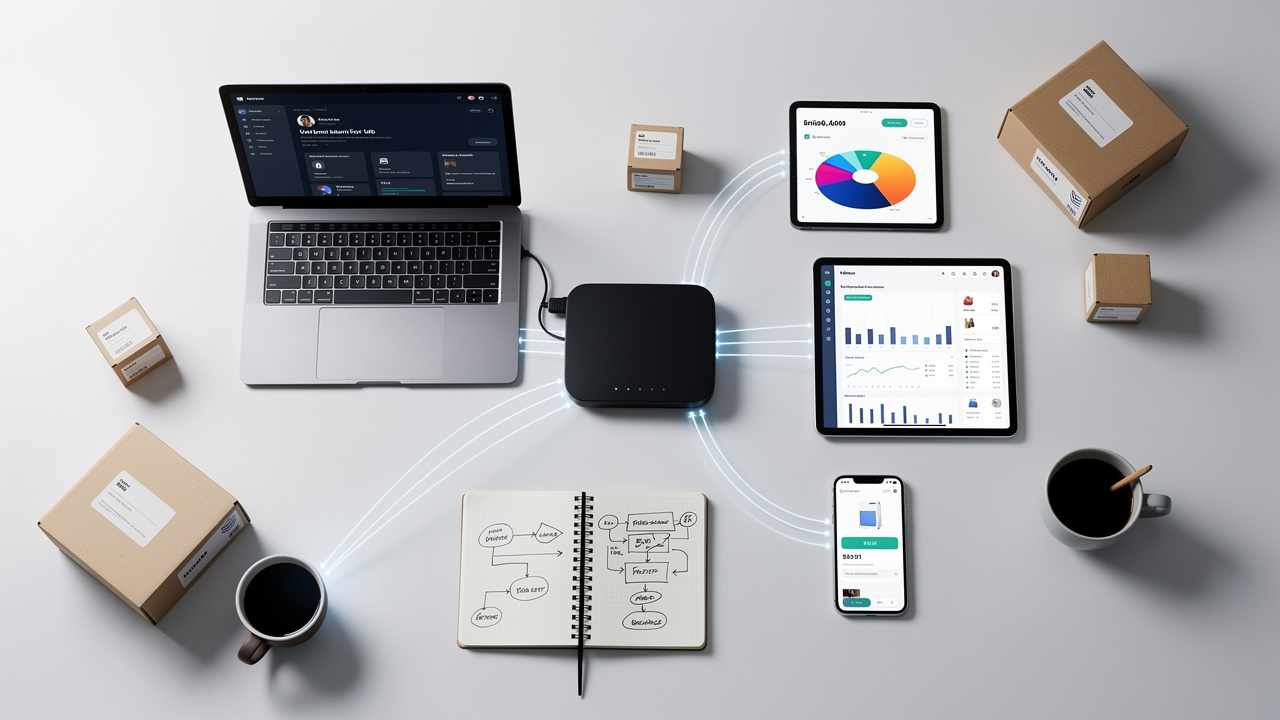 For IT Directors and CTOs, the critical question isn't whether AI agents provide value—it's whether implementation will disrupt existing operations, require massive infrastructure overhauls, or create security vulnerabilities. The good news: modern AI agent platforms are designed for seamless integration with existing systems rather than wholesale replacement.
The integration architecture centers on API-first connectivity. Your AI agent needs real-time access to several critical systems:
- E-commerce platforms like Shopify, BigCommerce, Magento, and WooCommerce provide APIs for product catalogs, inventory levels, order status, and customer accounts
- CRM systems like HubSpot, Salesforce, and Zendesk offer APIs for customer history, support tickets, and interaction logs
- Payment gateways like Razorpay and Stripe enable payment verification and refund processing
- Shipping providers like BlueDart and Delhivery (particularly relevant for the Indian market) provide tracking APIs for real-time package location updates
The implementation follows a structured three-phase roadmap:
Phase 1: Data Digestion involves feeding the AI agent your ground truth data—product CSV or JSON feeds containing SKUs, descriptions, specifications, and pricing; historical chat transcripts to learn your brand voice and common inquiry patterns; knowledge base articles and FAQs covering policies and procedures; and detailed shipping and return policies. This phase typically takes 1-2 weeks and establishes the agent's foundational knowledge.
Phase 2: Integration connects the agent to your operational systems. Technical teams configure API endpoints, establish authentication protocols, and map data fields between systems. The agent is deployed across multiple communication channels—WhatsApp (vital for the Indian market where it's the dominant messaging platform), Instagram DM, Facebook Messenger, and your website's native chat widget. This phase usually requires 1-2 weeks depending on the complexity of your tech stack and the number of integrations.
Phase 3: Guardrails and Safety implements critical controls to prevent errors and maintain compliance. Large Language Models can occasionally "hallucinate"—generate plausible-sounding but factually incorrect information. Guardrails prevent this through several mechanisms:
- Deterministic filtering hard-codes certain responses for legal disclaimers, medical claims, or financial advice
- Prompt engineering restricts the agent's personality and response patterns to remain professional and brand-aligned
- PII masking confirms sensitive customer data like credit card numbers or passwords is redacted before being processed by the LLM, preventing data leakage
Data security and compliance receive paramount attention. For businesses operating in India or serving Indian customers, compliance with the Digital Personal Data Protection Act (DPDP) is mandatory. For those with global operations, GDPR compliance remains essential. End-to-end encryption protects all data in transit between the customer, the AI agent, and backend systems. Data masking automatically redacts sensitive information from chat logs. Role-based access controls confirm that only authorized personnel can access customer data, with detailed audit logs tracking all access for compliance verification.
The deployment timeline is remarkably compressed compared to traditional enterprise software. Modern AI agent platforms like ChatCrafter enable go-live within 2-6 weeks from initial setup to full production deployment. This rapid timeline is possible because these platforms offer pre-built connectors for popular e-commerce platforms and CRM systems, eliminating months of custom integration work.
Critically, implementation doesn't require ripping out and replacing your existing infrastructure. The AI agent works alongside your current systems, accessing them through APIs rather than requiring database migrations or platform changes. Your team continues using familiar tools—Zendesk for ticket management, Shopify for order processing, Salesforce for CRM—while the AI agent seamlessly integrates with all of them. This approach minimizes disruption and allows for phased rollout, starting with a limited scope (perhaps just WISMO queries) and expanding functionality as confidence grows.
The Human-in-the-Loop Model: Balancing Automation With Empathy
 One of the most common concerns we hear from Customer Service Directors is the fear of losing the "human touch" that differentiates their brand. The concern is valid—no one wants their customers to feel like they're talking to a soulless machine. The Human-in-the-Loop (HITL) model addresses this by positioning AI agents as amplifiers of human capability rather than replacements.
The philosophy is straightforward: AI handles routine tasks that don't require human judgment, while humans focus on complex, high-value interactions where empathy and creativity make a genuine difference. This isn't about replacing your customer service team; it's about empowering them to do their best work by removing the repetitive, soul-crushing aspects of the job.
Seamless handoff mechanisms confirm customers never feel abandoned by automation. The AI agent continuously monitors conversation sentiment through natural language analysis. When it detects frustration, confusion, or anger—phrases like "This is ridiculous," "I want to speak to a manager," or repeated questions indicating the agent isn't understanding—it immediately triggers an escalation. The human agent receives the full conversation transcript, customer history, and a summary of the issue, allowing them to jump in with complete context: "I can see you've been trying to resolve this shipping issue, and I apologize for the frustration. Let me personally make sure we get this sorted out for you right away."
Agent Assist Mode represents an innovative middle ground. During human-led conversations, the AI works in the background as a support tool. As the human agent chats with the customer, the AI suggests relevant knowledge base articles, drafts potential responses for the agent to review and send, fetches product links or order details, and highlights relevant policy information. The human agent remains in control, making final decisions about what to say and how to say it, but with AI-powered assistance that makes them faster and more accurate.
Continuous improvement happens through feedback loops. After each interaction, human supervisors can review AI responses and mark them as "Correct," "Needs Improvement," or "Incorrect." This feedback directly retrains the agent's logic, making it smarter over time. If the AI consistently mishandles a particular type of inquiry, the training data is updated to improve future performance. This creates a virtuous cycle where the AI becomes increasingly capable, allowing humans to focus on progressively more complex scenarios.
"Trust and transparency form the foundation of successful HITL implementation. Customers should know when they're interacting with an AI versus a human."
Attempting to disguise AI as human erodes trust when customers inevitably discover the deception. A simple disclosure—"I'm an AI assistant, and I can help you with most questions. If I can't resolve your issue, I'll connect you with a team member"—sets appropriate expectations and actually increases customer satisfaction because people appreciate the honesty.
The empowerment narrative matters for employee morale and retention. Customer service roles often suffer from high turnover because agents spend their days answering the same basic questions repeatedly. It's mentally exhausting and feels like wasted potential. When AI agents handle the routine inquiries, human agents become specialists tackling interesting, complex problems that require critical thinking and interpersonal skills. Job satisfaction improves, turnover decreases, and you retain your most experienced agents who provide the greatest value.
The numbers tell the story. In a well-implemented HITL model, AI agents handle 70-80% of inquiries completely autonomously. Human agents handle the remaining 20-30%, but these are the highest-value interactions—complex technical issues, emotionally charged situations, VIP customer concerns, and nuanced problems that require creative approaches. Your human team becomes more productive (handling fewer but more impactful interactions), more satisfied (doing more meaningful work), and more valuable (applying expertise where it matters most).
Measuring Success: Key Performance Indicators for AI Agent ROI
Data-driven decision-makers need concrete metrics to evaluate AI agent performance and justify the investment. The good news: AI agent effectiveness is highly measurable across multiple dimensions.
Deflection Rate measures the percentage of inquiries resolved entirely by the AI without human intervention. A well-performing AI agent achieves 70-80% deflection, meaning seven or eight out of every ten customer inquiries are handled completely autonomously. This metric directly translates to reduced workload for your human team. If you're currently handling 10,000 monthly inquiries and achieve 75% deflection, that's 7,500 tickets your human agents never have to touch.
Resolution Rate goes deeper than deflection by measuring whether inquiries were actually solved rather than merely deflected to FAQs or knowledge bases. A customer who gets sent to a help article but returns with the same question wasn't truly served. Target resolution rates of 75%+ indicate the AI agent is genuinely solving problems, not just pushing them elsewhere. This metric correlates strongly with customer satisfaction—resolved customers are happy customers.
First Response Time (FRT) measures the time from when a customer initiates contact to when they receive an initial response. AI agents consistently deliver FRT under 5 seconds, compared to human averages of 2-5 minutes. This immediate responsiveness significantly impacts customer perception of service quality. In the age of instant gratification, even a one-minute wait feels like an eternity.
Average Resolution Time (ART) tracks the total time from initial contact to complete issue resolution. AI agents reduce ART by eliminating the delays inherent in human support—no waiting for agents to finish other conversations, no searching through knowledge bases, no transfers between departments, no putting customers on hold. A WISMO query that might take 3-5 minutes with a human agent gets resolved in 30 seconds by AI.
Cost Per Conversation provides the clearest financial metric. Calculate your total AI platform costs (subscription fees, API usage charges, integration maintenance) and divide by the number of conversations handled. Compare this to your cost per human interaction (agent salary, benefits, training, overhead, infrastructure). Most businesses see 70-90% reduction in cost per conversation. For a business handling 10,000 monthly inquiries at ₹200 per human interaction (₹20 lakhs total), reducing cost per conversation to ₹30 through AI (₹3 lakhs total) represents ₹17 lakhs in monthly savings—over ₹2 crores annually.
Customer Satisfaction Score (CSAT) measures user happiness through post-interaction surveys. "How satisfied were you with this support experience?" rated on a 1-5 scale provides direct feedback on AI agent performance. Well-implemented AI agents consistently achieve CSAT scores of 4.2-4.5, often matching or exceeding human-only support scores. The key is setting appropriate expectations and providing seamless escalation when the AI reaches its limits.
Conversion Rate from Chat tracks the percentage of users who make a purchase after interacting with the AI agent. This metric demonstrates the revenue generation potential beyond cost savings. If 12% of customers who chat with the AI agent complete a purchase, compared to 8% of those who don't engage with chat, you're seeing a 50% lift in conversion directly attributable to the AI agent's assistance.
Revenue from Chat quantifies the direct sales volume generated through AI agent interactions. Track purchases made by customers who received product recommendations, abandoned cart interventions, or personalized suggestions from the agent. This metric transforms the AI agent from a cost center to a profit center in your financial reporting.
Net Promoter Score (NPS) measures willingness to recommend your brand based on the support experience. "How likely are you to recommend our company to a friend or colleague?" on a 0-10 scale provides insight into whether your AI agent is building or eroding brand loyalty. Target NPS scores above 50 indicate that your automated support is creating promoters rather than detractors.
KPI | Target Range | Business Impact |
|---|---|---|
Deflection Rate | 70-80% | Reduced human workload |
Resolution Rate | 75%+ | True problem-solving |
First Response Time | <5 seconds | Improved satisfaction |
Cost Per Conversation | 70-90% reduction | Direct cost savings |
CSAT Score | 4.2-4.5/5 | Customer happiness |
Conversion Rate Lift | 10-20% | Revenue growth |
NPS | 50+ | Brand advocacy |
Establishing baseline metrics before AI implementation is necessary. Measure your current performance across these KPIs, then track improvements over time. The first month might show modest gains as the AI agent learns and as you refine its training. By month three, you should see substantial improvements. By month six, the system should be fully optimized and delivering maximum ROI.
Continuous monitoring and optimization maintain sustained performance. Review AI agent interactions weekly, identify patterns in escalations or low-confidence responses, and update training data accordingly. The AI agent improves with more data and feedback, creating a compounding return on investment over time.
Future Trends: Voice Commerce, Visual Search, and Predictive Assistance
The AI agent capabilities we've discussed represent current, production-ready technology. But the trajectory of innovation points toward even more sophisticated interactions that will further transform e-commerce.
Voice Commerce integrates AI agents with smart speakers and voice-activated mobile assistants, enabling hands-free shopping and support. Imagine a customer saying, "Hey Google, ask my favorite store if they have the blue running shoes I bought last year in stock," and receiving an immediate, accurate response. Voice interfaces are particularly valuable for accessibility—serving customers with visual impairments or mobility limitations—and for multitasking scenarios where hands and eyes are occupied. The Indian market, with its diverse linguistic profile, stands to benefit enormously as voice recognition improves for regional languages and dialects.
Visual Search and Recognition allows customers to upload photos of products they like, and the AI agent identifies and locates similar items in your catalog. A customer sees a dress they love on Instagram, takes a screenshot, uploads it to your chat, and asks, "Do you have anything like this?" The AI analyzes the image for style, color, pattern, and silhouette, then suggests the closest matches from your inventory. This capability bridges the gap between inspiration and purchase, capturing demand that would otherwise go to competitors.
Predictive Assistance shifts from reactive to proactive support. Instead of waiting for customers to ask questions, AI agents use predictive analytics to reach out before problems arise. If a shipment is delayed due to weather, the agent messages the customer proactively: "I wanted to let you know that your order might arrive a day late due to heavy rain affecting deliveries in your area. I've applied a 10% discount to your next purchase as an apology for the inconvenience." This proactive communication transforms potential negative experiences into opportunities to demonstrate exceptional service.
Augmented Reality (AR) Integration enables virtual try-ons launched directly within chat interfaces. A customer browsing sunglasses receives a message: "Would you like to see how these look on you?" Clicking "Yes" activates their camera, overlaying the sunglasses on their face in real-time. This technology, already deployed by leading fashion and eyewear brands, reduces return rates by helping customers make confident purchase decisions.
Multi-modal Interactions combine text, images, voice, and video within a single conversation flow. A customer might start by typing a question, receive a product image in response, ask a follow-up question via voice, and watch a short video demonstration—all within the same chat thread. This flexibility accommodates different communication preferences and situational contexts, making the experience more natural and effective.
Early adopters of these technologies will gain significant competitive advantages. As these capabilities become standard customer expectations, businesses that have already integrated them will be positioned as innovation leaders, while those still relying on traditional support models will appear outdated. The technology is evolving rapidly, but it's not science fiction—these capabilities are being deployed in production environments right now by forward-thinking e-commerce companies.
The key is to view AI agents not as a one-time implementation but as an evolving platform. Start with core capabilities—automated inquiry resolution, conversational commerce, abandoned cart recovery—and progressively add advanced features as they mature and as your team gains confidence with the technology. This phased approach minimizes risk while positioning your business at the forefront of customer experience innovation.
Conclusion
The transformation from reactive support to proactive growth strategy represents a fundamental shift in how we think about customer engagement. AI agents deliver the dual benefit that every business leader seeks: dramatic cost reduction and revenue growth through personalized, scalable engagement.
We've moved beyond the question of whether to adopt AI agents to how quickly we can implement them effectively. The competitive setting no longer allows for a wait-and-see approach. Customers have experienced the instant, personalized service that AI agents provide from leading e-commerce brands, and those expectations now apply to every online shopping experience. Businesses that continue relying solely on human support face escalating costs, limited scalability, and customer satisfaction scores that lag behind AI-enabled competitors.
The accessibility of this technology has reached a tipping point. Modern platforms enable rapid deployment without massive IT overhauls, extensive custom development, or months-long implementation cycles. We're talking about 2-6 weeks from initial setup to full production deployment, with measurable ROI visible within the first quarter. The barriers that existed even two years ago—technical complexity, prohibitive costs, immature technology—have largely disappeared.
The human empowerment narrative deserves emphasis. This isn't about replacing people with machines; it's about freeing talented customer service professionals from soul-crushing repetition so they can focus on complex interactions where empathy, creativity, and judgment create genuine value. Job satisfaction improves, turnover decreases, and your most experienced team members apply their expertise where it matters most. The AI handles the routine; humans handle the exceptional.
Returning to Peter Drucker's insight about creating the future, businesses that proactively adopt AI agents are doing exactly that—building competitive advantages that compound over time. Every interaction the AI agent handles autonomously reduces costs. Every personalized product recommendation increases revenue. Every satisfied customer becomes a potential promoter. These benefits accumulate, creating a widening gap between AI-enabled businesses and those still operating with legacy support models.
We encourage you to evaluate your current support costs, customer satisfaction metrics, and growth constraints through the lens of AI agent capabilities. Calculate your monthly inquiry volume and multiply by your cost per interaction—that's your baseline. Now imagine reducing that cost by 70-90% while simultaneously improving response times, extending to 24/7 coverage, and adding revenue-generating conversational commerce capabilities. The business case typically becomes obvious within minutes of running the numbers.
The future of e-commerce belongs to brands that combine technological efficiency with authentic human connection. AI agents handle the scalable, repeatable interactions with speed and consistency. Human teams provide the empathy, judgment, and creativity that build lasting customer relationships. Together, they create customer experiences that are both efficient and emotionally resonant—the combination that drives sustainable competitive advantage in the digital marketplace.
FAQs
How Long Does It Take to Implement an AI Agent for an E-commerce Business?
Typical implementation timelines range from 2-6 weeks from initial setup to full production deployment, depending on the complexity of your integrations and the scope of functionality you're launching with. The process breaks down into three phases: 1 week for data ingestion and training (feeding product catalogs, policies, and historical chat transcripts to the AI), 1-2 weeks for API integrations with your e-commerce platform, CRM, and other systems, and 1-2 weeks for testing and refinement. Modern platforms like ChatCrafter offer pre-built connectors for popular e-commerce platforms such as Shopify, WooCommerce, and Magento, significantly reducing integration time. Many businesses start with a limited scope—perhaps just WISMO queries and basic product questions—and expand functionality over time as confidence grows. This phased approach allows you to demonstrate value quickly while minimizing risk and disruption to existing operations.
Will an AI Agent Work With My Existing E-commerce Platform and Tools?
AI agents are designed to integrate with virtually any modern e-commerce infrastructure through API-first architecture. As long as your systems have APIs (which all contemporary platforms do), integration is possible. Confirmed compatibility includes major e-commerce platforms like Shopify, WooCommerce, Magento, BigCommerce, and custom headless setups. Common integrations extend to CRM systems (Salesforce, HubSpot, Zendesk), helpdesk tools (Gorgias, Freshdesk), payment gateways (Razorpay, Stripe), and shipping providers (BlueDart, Delhivery for the Indian market, as well as international carriers). The critical point is that implementation doesn't require replacing your existing systems. The AI agent works alongside your current infrastructure, accessing data and executing actions through APIs rather than requiring database migrations or platform changes. Your team continues using familiar tools while the AI agent seamlessly integrates with all of them, minimizing disruption and learning curves.
How Do AI Agents Handle Complex Customer Issues That Require Human Judgment?
AI agents employ the Human-in-the-Loop (HITL) model, where routine queries are handled autonomously while complex issues are escalated to human agents. The system uses multiple escalation triggers: sentiment analysis detecting frustration or anger in the customer's language, high-value account flags for VIP customers or large orders, legal or fraud concerns that require specialized expertise, and queries where the AI's confidence level falls below a predetermined threshold. When escalation occurs, the handoff is seamless—the human agent receives the full conversation transcript, complete customer history, and a summary of the issue, eliminating the need for customers to repeat themselves. The AI agent can also work in Agent Assist Mode, where it operates in the background during human-led conversations, suggesting responses, fetching relevant information, and drafting replies for the human agent to review and send. This approach confirms that AI strengthens human capabilities rather than replacing them entirely, preserving empathy and judgment where they matter most.
What Kind of ROI Can We Expect From Implementing an AI Agent?
The financial impact manifests across both cost reduction and revenue growth. Cost savings typically range from 70-90% reduction in cost per conversation compared to human-only support. For a business handling 10,000 monthly inquiries at ₹200 per human interaction (₹20 lakhs total monthly cost), implementing an AI agent that reduces cost per conversation to ₹30 (₹3 lakhs total) represents ₹17 lakhs in monthly savings—over ₹2 crores annually. Revenue impact includes 15-25% improvement in abandoned cart recovery rates, 10-20% increase in conversion rates from chat interactions, and higher average order values through intelligent cross-selling and upselling. Most businesses see positive ROI within 3-6 months of full deployment. Additional benefits include improved CSAT scores (typically 4.2-4.5 on a 5-point scale), reduced employee turnover as human agents focus on more fulfilling work, and the ability to scale support during peak seasons without proportional cost increases. The ROI compounds over time as the AI agent learns from more interactions and as you expand its capabilities to cover additional use cases.
Is Customer Data Secure When Using AI Agents, Especially With India's Data Protection Laws?
Data security and compliance are foundational requirements for reputable AI agent platforms. Full compliance with both GDPR (for businesses with European customers) and India's Digital Personal Data Protection Act (DPDP) is standard. Security measures include end-to-end encryption for all customer conversations, protecting data in transit between the customer, the AI agent, and your backend systems. PII masking automatically redacts sensitive information like credit card numbers, passwords, and government ID numbers from chat logs before processing. Data residency options allow you to store and process data within India to comply with local regulations. Role-based access controls confirm only authorized personnel can access customer data, with detailed audit logs tracking all access for compliance verification. Regular security audits and penetration testing identify and address vulnerabilities proactively. Reputable platforms treat security and compliance as foundational requirements rather than afterthoughts, understanding that a single data breach can destroy customer trust and brand reputation. When evaluating AI agent platforms, request detailed documentation of their security architecture, compliance certifications, and data handling procedures to verify they meet your standards and regulatory requirements.
Ready to transform your customer experience?
Join 10,000+ businesses already using chatcrafter to automate support and drive growth.
No credit card required. Free plan available.